Friday, November 02, 2007
Recent children's fantasy films - Stardust, The Seeker
Fantasy movies can be difficult to get right, with far more unsuccessful than successful ones Though there have been a few good ones in the past, they mostly just end up being kind of B-grade. Fortunately, the genre is taken seriously these days, with better casting and acting and excellent possiblities due to digital effects (if used sensibly).
Here's a couple of current family fantasy films that I caught recently, both literary adaptations using the quest theme.

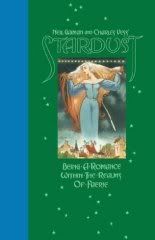 Stardust was a pleasant surprise in every respect - a fantasy film that actually managed to improve on the text of the book in a number of areas - who'd have thought that was possible?
The film isn't based on a graphic novel per se (as has been widely and incorrectly reported), but rather a text modern fairy tale by Neil Gaiman, sumptuously illustrated by Charles Vess. While there is a standard paperback (film tie-in) release everywhere at the moment, the magnificently Charles Vess illustrated edition (latest release ISBN 1-4012-1190-9) is the only version of this book to own, in my opinion - Vess' pictures bring out the characters in a complementary way with the narrative. I found the characterisation somewhat underdeveloped in the text alone, which is one reason the film benefited - being able to fill out those emotional depths and unseen character interactions (particularly the central romance). Actually, call me greedy, but I'd quite to see a full graphic novel rendering!
Set in an English village on the border of Faerie, this tale reminds me thematically of Lord Dunsany's (pre-Tolkien) lost classic The King of Elfland's Daughter, which is no bad thing! Tristan sets off into Faerie in search of a star for his aloof sweetheart Victoria, finding himself in a race that involves the royals, witches and pirates of this other world. Claire Danes is perfectly cast and the "name" actors are well-directed in performances that are campy, yet somewhat restrained, considering the material. It is (like the book) a little too gory for younger children, but otherwise well worth seeing on the big screen.

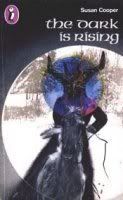 The week before we saw Stardust, we made sure we caught the first film adaptation of Susan Cooper's English children's classic, The Dark is Rising, adapted as a film under the title The Seeker: the Dark is Rising (an approach similar to that used with the "Narnia" movies).
This quintessentially British tale of past and present magic is bound to particular English landscapes, and historic and mythical traditions. Therefore I felt an initial sense of horror upon finding that the entire central cast, including Will, had been rewritten as Americans. The fact that they were good actors, who all performed well in their roles, never dispelled the glaring illogic of this decision. To further the literalism and misunderstanding of Cooper's work, there was an ungainly early sequence featuring security guards who literally transform into demons. Clearly, someone (in all probability, not the director) wanted to make a quite different film.
All in all, it's well directed and improves from there, and the always strong Christopher Eccleston puts in another fine performance as The Rider, but those early bad decisions hamstring what could have been a much more powerful fantasy film. A recut might improve it slightly, as apparently The Walker was filmed but left on the cutting room floor. As a "boy's own" mythic adventure with a straight ahead quest narrative, it works well enough, but my concern is that it will mean that another, more faithful film version of this book (or the rest of the series, for that matter) will never be made.
I'm not sure who the audience is for a Bowdlerised rendition of a well-loved book - a mistake Peter Jackson carefully avoided with his Lord of the Rings adaptations, walking a line between personal creative vision and fidelity to source.
Given the recent Earthsea miniseries and anime adaptation, perhaps Susan Cooper should get together with Ursula Le Guin to form a Society for Authors of Classic Children's Fantasy Whose Work is Always Screwed Up by Film Companies.
I've also recently seen a few musicals:
Hairspray - intermittently excellent but inconsistent
Across the Universe - amazingly good and definitely recommended, particularly for Beatles fans!
(I started this post a while ago and am posting it much later)
Here's a couple of current family fantasy films that I caught recently, both literary adaptations using the quest theme.
Stardust was a pleasant surprise in every respect - a fantasy film that actually managed to improve on the text of the book in a number of areas - who'd have thought that was possible?The film isn't based on a graphic novel per se (as has been widely and incorrectly reported), but rather a text modern fairy tale by Neil Gaiman, sumptuously illustrated by Charles Vess. While there is a standard paperback (film tie-in) release everywhere at the moment, the magnificently Charles Vess illustrated edition (latest release ISBN 1-4012-1190-9) is the only version of this book to own, in my opinion - Vess' pictures bring out the characters in a complementary way with the narrative. I found the characterisation somewhat underdeveloped in the text alone, which is one reason the film benefited - being able to fill out those emotional depths and unseen character interactions (particularly the central romance). Actually, call me greedy, but I'd quite to see a full graphic novel rendering!
Set in an English village on the border of Faerie, this tale reminds me thematically of Lord Dunsany's (pre-Tolkien) lost classic The King of Elfland's Daughter, which is no bad thing! Tristan sets off into Faerie in search of a star for his aloof sweetheart Victoria, finding himself in a race that involves the royals, witches and pirates of this other world. Claire Danes is perfectly cast and the "name" actors are well-directed in performances that are campy, yet somewhat restrained, considering the material. It is (like the book) a little too gory for younger children, but otherwise well worth seeing on the big screen.
The week before we saw Stardust, we made sure we caught the first film adaptation of Susan Cooper's English children's classic, The Dark is Rising, adapted as a film under the title The Seeker: the Dark is Rising (an approach similar to that used with the "Narnia" movies).This quintessentially British tale of past and present magic is bound to particular English landscapes, and historic and mythical traditions. Therefore I felt an initial sense of horror upon finding that the entire central cast, including Will, had been rewritten as Americans. The fact that they were good actors, who all performed well in their roles, never dispelled the glaring illogic of this decision. To further the literalism and misunderstanding of Cooper's work, there was an ungainly early sequence featuring security guards who literally transform into demons. Clearly, someone (in all probability, not the director) wanted to make a quite different film.
All in all, it's well directed and improves from there, and the always strong Christopher Eccleston puts in another fine performance as The Rider, but those early bad decisions hamstring what could have been a much more powerful fantasy film. A recut might improve it slightly, as apparently The Walker was filmed but left on the cutting room floor. As a "boy's own" mythic adventure with a straight ahead quest narrative, it works well enough, but my concern is that it will mean that another, more faithful film version of this book (or the rest of the series, for that matter) will never be made.
I'm not sure who the audience is for a Bowdlerised rendition of a well-loved book - a mistake Peter Jackson carefully avoided with his Lord of the Rings adaptations, walking a line between personal creative vision and fidelity to source.
Given the recent Earthsea miniseries and anime adaptation, perhaps Susan Cooper should get together with Ursula Le Guin to form a Society for Authors of Classic Children's Fantasy Whose Work is Always Screwed Up by Film Companies.
I've also recently seen a few musicals:
Hairspray - intermittently excellent but inconsistent
Across the Universe - amazingly good and definitely recommended, particularly for Beatles fans!
(I started this post a while ago and am posting it much later)
Labels: Lord Dunsany, Movie reviews, Stardust, The Dark is Rising film
Thursday, January 05, 2006
The Chronicles of Narnia: The Lion, The Witch and The Wardrobe
 While this is a good film overall, it is definitely as overlong as the title, and in need of an edit. J and L enjoyed it thoroughly, and have both heard the book read aloud. J has spoken to a number of her friends since seeing it and they also enjoyed it, apparently without having read the book. As a film on its own, it is certainly a success, though my (major) reservation about the ponderous length stands. I’m not sure why every film these days needs to be of epic length!
 Throughout the entire film there are numerous reaction shots – closeups of the faces of characters as they look long at each other, or some bit of scenery. This adds considerably to the length, particularly in the pre-Narnia sequences. The morality of all the children in the film seems questionable, with their hiding (after accidentally breaking a leadlight window) here being their motivation for getting into the Wardrobe, and their consistently selfish and indifferent attitude to the denizens of Narnia often leaving a bad taste. Maybe this is modern religious morality at work, as opposed to the higher morality clearly espoused by Lewis in the books, but it works against some of the positive elements.
The casting of the four lead child actors is excellent. Their ages have been separated further than in the books, but all four carry their roles well and with conviction. Mr. Tumnus the faun is performed with vulnerability and warmth. Tilda Swinton is in fine form as the Witch, able to be charming or coldly repellant by turns – a brave piece of casting that pays off.
The creatures are beautifully computer animated, with the Beavers being an absolute triumph (particularly in contrast with the costumed travesties of the BBC TV adaptation a decade or so ago). Aslan is a mixed success – at times coming across as the required iconic spiritual leader, and at other times coming across as a slightly awkward composite of CGI lion and Liam Neeson’s voice, which seems to want to drift off towards a narrative role.
There is a failure to really build the relationship between the children and Aslan, particularly where they walk with Aslan (a key passage in the books). This sequence also leads to one of the most oddly abrupt jump cuts, from their concealment to the gathering monsters.
 Susan has (as in the books), the most thankless role – while well-acted, her character is awkwardly set up. Her line about a “man in a red suit” makes no sense at all, given that Father Christmas in this film is in more traditional (non-red) costume. And her intitials (SP) on the quiver he gives her can only be regarded as cheesy in the extreme. The conflicted Edmund, by contrast, is well-developed, and the sibling dialogue between all four children is convincing.
 The changes made from film to book sometimes serve the plot well enough and sometimes not. Having Edmund encounter Mr. Tumnus - and the consequences of his actions - in the Witch’s dungeons, makes complete sense.
However, the protacted and invented scene involving crossing a melting river, slows the action, makes no logical sense (the wolves cross on the rocks above and actually get ahead of the children), gets bogged down in nonsensical dialogue and leads to some bad jump cuts, setting up cliched “near-drowning” sequences. In particular, Maugrim, the Chief Wolf, is ineffectual in a way he never is in the book, failing to dispatch Mr. Beaver while he can. The protracted conversation with him seems to only serve to showcase the screen cuteness of the wolves (a problem in any case), and the fight with Peter couldn’t be more Hollywood, or different from the vivid description in the book, both in feel and meaning. (I’d also like to know how The White Witch gets her war chariot from an overlooking rockpile onto the battlefield.)
The soundtrack works well, forming a tight synergy with the pacing and direction choices, being willing to cover broad musical ground (it even drifts toward ambient rock at points - something Howard Shore’s humourless and conventional orchestration on “The Lord of the Rings” films would never do).
In every other respect, the film of The Lion, The Witch and the Wardrobe tries to be literal to the book. It works hard to establish the gritty reality and dark rooms of a world that I never imagined as gritty or dark. The houses of Tumnus and the Beavers lack any sense of warmth at all, and the stony countryside where Aslan’s army gathers seems far from the beautiful green hills of an imagined Narnia. The influence of Pauline Baynes (illustrator of the books) is felt in many respects, such as the decision to make Lucy brown-haired rather than blonde, and the composition of many images, but the warmth and lightness of her touch is absent. Also lost is C.S. Lewis’s distinctive leavening humour.
While this is a fine film featuring strong casting and set pieces, and very entertaining, it somehow falls short of capturing Narnian magic. A tighter edit could well consolidate its many strengths.
Labels: Movie reviews
Friday, December 30, 2005
Tim Burton's Corpse Bride
 Today we finally caught up with this film. I’m pleased (and a little surprised) to say that I thoroughly enjoyed Tim Burton’s Corpse Bride! What a tight, well-told, imaginative and effective piece of cinema this proved to be!
 With the PG rating, I must admit I had some reservations about how sensitive children might deal with the issues of life and death that this film presents (not to mention the visions of cavorting skeletons and dead characters looking a little the worse for wear). It begins like a far more traditional children’s film using animated figures (such as those old Rankin Bass Christmas specials), with somewhat stilted figures inhabiting a well modelled village.
The contrasting colours – rendering the world of the living in black and white, but mostly greys, as opposed to the more colourful world of the dead – subtley provides a thematic foundation that lends credibility to this world and its characters.
I was sold at the point where Victor started playing the piano, with complete fidelity and accuracy to the piece we were hearing (a rarity in live action films, not to mention animation!). Already a sense of respect for both viewer and work was strikingly apparent, and I relaxed and enjoyed all that followed.
Skeletons – a beloved staple of animators – sing, dance and work through imaginative musical routines that hark right back to Disney’s early Danse Macabre Silly Symphony. They don’t outstay their welcome. In this film, even while working with a potentially high grossness factor, Burton and Co. manage to reign themselves in and maintain a sense of sweetness and wonder amid the darkness. What is pleasing is the sense Burton conveys of a somewhat macabre, but completely non-malevolent world of dead characters. While the living plot, scheme and manipulate, the dead are in many senses powerless, as well as for the most part good-humoured.
The tall and slender figures of the main characters has meant that shots are often set up almost diagonally - camerawork and lighting are skillfully combined with figure animation throughout. The voice acting is consistently strong, featuring Burton regulars Johnny Depp and Helena Bonham-Carter among a stellar cast.
 There is real joy in the character designs. The figure of Emily, the Corpse Bride, is rendered romantically and with affection: even with a skeletal arm and leg, and a stray eyeball, she remains a charming and winsome creation. This character presents a slyly ironic realisation of the Victorian romantic vision of girls as frail and romantically death-like. Much of the story is driven by Emily, and also Victoria (the other young lady vying for Victor’s affections) and these two drive much of the plot between them.
 One of the sweetest touches, and one where Burton shows real love for his characters and his material, is the gift that Emily gives to Victor – surprising, clever and completely appropriate.
Throughout this film I felt a sense of “How will Burton get out of this one?” as plot complications interwove with one another, providing conundrums and choices for a range of characters. What I felt in the end was a sense of having been driven deftly down some busy streets by an immensely skilled director at the top of his form: the film unfolds in some unexpected directions, but completely compelled me to follow. Overall, an imaginative film working with some macabre material, rendered with real joy and pathos - very enjoyable!
Labels: Animated films, Movie reviews
Thursday, September 22, 2005
Wallace & Gromit: The Curse of the Were-Rabbit
 Today we saw the new, feature-length Wallace and Gromit film. It's a lot of fun, but in many ways doesn't quite work, though I'm at something of a loss to explain why. The plot, which revolves around Wallace and Gromit's company, Anti-Pesto, working at humane bunny removal, gets a bit bogged down toward the middle but then livens up considerably once the new were-rabbit plot unfolds.
 The characters of Wallace and Gromit certainly remain as loveable as ever, and seeing their surroundings more heavily populated with a full range of British eccentrics is entertaining. As usual, there is a multitude of brilliant gags, but for some reason they often fall flat here. How hilarious they are is easily demonstrated by seeing any of them in isolation (as I'd done earlier with the were-bunny bait and bridge sequence). Somehow, in context, there is a narrative seriousness at work that seems to dispel much of the humour, and I think the Hans Zimmer, Danny-Elfman-referencing score is partly to blame (though he is a terrific film composer in general).
 Two of my favourite sequences are the opening pan across framed pictures portraying Wallace and Gromit's history together, with its schisms and resolution, and the near-death experience vision of one of the bunnies in an early scene. The early sequences showing Wallace and Gromit's morning routines are unfortunately likely to be over-familiar to fans, but should have plenty of magic for those new to this pair's antics.
 There are many sequences referencing familiar films, such as Raiders of the Lost Ark and King Kong, but these at times detract from the action itself. The romance between Wallace and Lady Tottingham-Smith is cute and does add a certain amount of depth, but many of the elements throughout echo A Close Shave a little too closely for my liking.
It is delightful to see this amazing claymation on screen (complete with fingerprints) - replete with beautifully detailed backgrounds and diverse characters. It's well worth seeing for animation fans for the change of pace from computer-animated fare. Somehow the nature of Wallace and Gromit as characters fails to carry a feature-length work fully, whereas Aardman's previous movie, Chicken Run provided real heroism (particularly in the character of Ginger) along with considerable depth and much-needed pathos to help balance the humour. Nonetheless, it is undeniably enjoyable to have Wallace and Gromit back!
J said it was "a bit silly" but still gave the film 4 stars (David Stratton on At the Movies gave it 5).
As a nice bonus, there was a Madagascar animated short, featuring the penguin characters during a Zoo Christmas in New York, and this worked better for me than anything in that film :).
Labels: Animated films, Movie reviews
Sunday, September 04, 2005
Charlie and the Chocolate Factory
 We just got back from seeing Tim Burton's film of Charlie and the Chocolate Factory at our recently reopened local independent cinema. It was another movie I was prepared to dislike, but thought deserved a chance anyway - particularly considering the rave reviews it's been receiving. I think it's a qualified success.
While Burton has been quoted as disliking the original film and intending to remain faithful to the book in his version, neither of these are borne out in the new film itself. In fact, visually and directionally, Charlie often recalls the original film, Willy Wonka and the Chocolate Factory, starring Gene Wilder, but also it curiously references Burton's own Edward Scissorhands repeatedly, although without the sombre pathos of that remarkable film.
For anyone of my generation - many of whom rate Willa Wonka as an all-time favourite - it's hard to get past the original film version. There are a few omissions in that film - such as showing the children at the end - that are here redressed, along with a number of non-book additions, such as the subplot involving Wonka's dentist father (Christopher Lee in a role that somewhat parallels Vincent Price's in Edwards Scissorhands). There are new inconsistencies (Who are all those men on motorbikes who come out of the factory to put up posters?, What happened to Charlie's change?, If Wonka is reconciled with his father will he still need Charlie?*) and some new invention, certainly enough for the film to draw the viewer into this bizarre, marvellous world, at least at a superficial level.
The flashback showing Wonka in Oompa Loompa Land, whilst enjoyable and direct from the book, does remove ambiguity from the childlike shiftiness of the Wonka portrayed in the original film. Danny Elfman's songs, which set words direct from the books to music, are somehow inadequate, with the exception of the introductory "Willy Wonka" song, sung by the puppets - the lyrics are largely unintelligable and very prosaic when they can be understood, which is a long way from the consistent classics of the first film.
 Scenery-wise, too many setpieces to recount appear directly reminiscent of the first film, but The Chocolate Room and The Television-Chocolate Room are probably sufficient to show what I mean, the latter being additionally saddled with a drawn out injoke referencing Kubrick's 2001.
The child actors hold up fairly well for the most part, particularly Charlie (Veruca looks disturbingly like my niece!). The reintroduction of the squirrels in the Nut Room sequence is welcome, and also among the creepier, Burtonesque moments (thankfully, there aren't too many). This scene works well on its own merits, but it's impossible to beat the showstopper from Willy Wonka (though the squirrels are equisite and the set design perfect).
Charlie's parents and grandparents are all excellent performances but overall, the other adult performances are subdued and unremarkable.
With the exception of Johnny Depp, that is! Most critics commenting on this film have raved about his unbelievably odd performance. Wilder's inspired, nuanced and scary performance as Willy Wonka aside, Depp reinterprets the role in a disturbed, idiosyncratic and bizarre manner. Sporting a Prince Valiant hairstyle and a wide toothy grin not reflected in his eyes, this Wonka works by turns to distance and embrace both audience and characters alike - and this is compelling to watch. I do wish the rewrite had given him more depth and some better lines, but the added flashbacks with his father do add something, though it is ultimately inconclusive.
On it's own terms Charlie and the Chocolate Factory is an enjoyable, diverting entertainment. However, for those familiar with the original film, it feels at too many points like a remake, rather than something entirely new. J and L really enjoyed it (and also enjoy the earlier film).
* SPOILER ALERT! Jill suggested I post my theory about part of the film here, with my review. I read the scene where Wonka visits his father, in a house standing alone, as him coming to feel at peace with his father, who is actually deceased. This echoes Wonka's father's threat about being "gone," and the disappearance of his house in the earlier scene. Very nice symbolism and an effective addition!
Labels: Charlie and the Chocolate Factory, Movie reviews
Sunday, July 31, 2005
War of the Worlds
Today H and I went to see War of the Worlds (she turned 17 on Thursday so we got together to see a film, talk and shop a bit).
It was definitely as good as the reviews have suggested - a non-stop rollercoaster and amazingly compelling, though I had to remind myself that I was being "Spielberged" at times because I found this film so absorbing that it really distressed me. As people have said, Dakota Fanning's performance is wonderfully convincing to the point of being traumatic at times, and all the cast perform brilliantly.
It's also remarkably faithful to the original classic by H. G. Wells, even given the changed time setting (and some character amalgamation and additional connection of events). There's even successful use of an opening and closing narration direct from the text (though I must admit to being programmed to expect the refrain from Jeff Wayne's concept album*).
This was an interesting entry in the current spate of post-apocalyptic films around, and a reminder of just how powerful this genre can be. It certainly wasn't optimistic about mankind, but did successfully portray the way a variety of people might react in dire circumstances with expert narrative dexterity.
All in all very entertaining, but also extremely dark and moderately depressing. Highly recommended for adventure/horror fans.
* Soon to be available as a 7 CD 30th Anniversary Collectors' Box Set.
It was definitely as good as the reviews have suggested - a non-stop rollercoaster and amazingly compelling, though I had to remind myself that I was being "Spielberged" at times because I found this film so absorbing that it really distressed me. As people have said, Dakota Fanning's performance is wonderfully convincing to the point of being traumatic at times, and all the cast perform brilliantly.
It's also remarkably faithful to the original classic by H. G. Wells, even given the changed time setting (and some character amalgamation and additional connection of events). There's even successful use of an opening and closing narration direct from the text (though I must admit to being programmed to expect the refrain from Jeff Wayne's concept album*).
This was an interesting entry in the current spate of post-apocalyptic films around, and a reminder of just how powerful this genre can be. It certainly wasn't optimistic about mankind, but did successfully portray the way a variety of people might react in dire circumstances with expert narrative dexterity.
All in all very entertaining, but also extremely dark and moderately depressing. Highly recommended for adventure/horror fans.
* Soon to be available as a 7 CD 30th Anniversary Collectors' Box Set.
Labels: Movie reviews
Sunday, July 10, 2005
Madagascar
 I just got back from taking J and L to see Dreamworks new animated feature Madagascar. It’s not bad, though it’s fair to say my expectations were fairly low, and I must admit I had reservations about seeing it at all, given the premise. Madagascar is a place that I’m keen to visit – an oasis of spectacularly unique and unusual wildlife - so for that reason, I was always going to find this film disappointing.
The focus of the film is a group of four African animals (albeit with some penguins and monkeys along for comic relief), and Madagascar seems to be merely a device, an incidental backdrop for some of their interactions. To have Madagascar, a fairly overpopulated island with massive overclearing problems, treated as a mythical last wilderness seems to me absurd, though the jungle backgrounds are beautifully executed with a high degree of research and detail evident.
The film opens in the depressing environs of the Manhattan Central Park Zoo, which has tiny barred enclosures that look like something out of the Victorian era but make no sense in terms of containing the animals (such logic apparently isn’t important to the film). The animals, particularly Alex the lion, are treated purely as entertainments and Marty the Zebra finds his 10th birthday a depressing and cathartic turning point. Gloria the hippo (the film’s only female animal character) and Melman, the hyperchondriac giraffe, perform the primary supporting roles to the volatile friendship of Alex and Marty.
Like all Dreamworks animations, this film is primarily a male buddy movie, though the main characters are unfortunately underdeveloped, with the emphasis being on wisecracks and slapstick humour (fairly well-done if that’s your thing). While the computer animation has a very artificial storybook look to it – Alex’s paws seem oddly as if they’re cut out of gingerbread at times – the character designs are excellent, and this stylisation works in the story’s favour.
The captivity aspect of the Zoo has some clever echoes, with the animals thinking themselves in San Diego Zoo’s leafy havens at one point, and Alex putting himself back into captivity at a later stage (a neat psychological touch). My favourite sequence is the imaginative crate scene, which finds the four main characters in effectively separate frames on screen – making clever use of the format and seeming like a living comic book.
Alongside this, the grouping of sundry lemur (and other) species into a massive conglomerate of partying morons, chanting “I Like to Move it, Move it,” is an unedifying spectacle. There are touches here that show what another film might have been like. The central team of a ringtailed lemur leader (thanklessly performed by Ali G), an aye-aye sidekick and a cute mouse lemur have a lot of promise, but little chance to deliver on it. Signs of both imagination and research are present, primarily in the streaked tenrec, geckoes and chameleon, but the film-makers' thoughts are ever far from Madagascar itself.
Possibly, the worst aspect is the casting of the “foosas” as hyena-like, ravening, speechless marauders, swarming in a ridiculously enormous predatory crowd. The fossa (or fosa) is a rather large member of the civet family, indigenous to Madagascar, always in low numbers and now critically endangered. It’s a solitary and wary hunter, always seldom seen (not to be confused with the fanaloka, a smaller striped civet which has the scientific name, fossa fossa). At any rate, “foosas” get a raw deal as the obligatory baddies in a scenario which is actually trying to raise questions about carnivores.
Worst of all, the entire film gives no hint of the desperate environmental situation of Madagascar and its remarkable wildlife. Maybe it’s too much to expect of a film, but somehow the title and setting seem to me expedient and meaningless. The central story – that of buddy team Alex and Marty – could as well have been told in the backwoods of some American setting with no loss to the story at all.
I’d hate to think this was people’s only impression of Madagascar. There are now many excellent books on the place and its wildlife. As a general travel book to start with, I’d recommend The Lonely Planet Guide to Madagascar.
All in all, Madagascar is an okay family film, with some fairly entertaining sequences, but far from a classic.
Labels: Animated films, island wildlife, Movie reviews
